In June 2024, my mom made me attend this course, which I didn’t want to do at all. When my mom first told me about it, it sounded extremely boring, and I remember asking her why I even had to go for the demo session in the first place. I was extremely annoyed about it. But when I reached there, my opinion changed. The environment there, from the aesthetic interiors to the way their faculty and staff were, felt so welcoming. I even spotted a familiar face from my school there, and that made it even more comfortable. I thought, “I can at least give it a chance!”
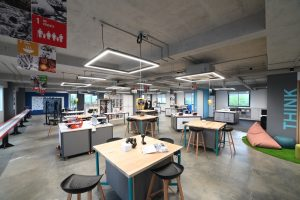
The course was called “Designing Sustainable Cities with Biomimicry,” and it was conducted by Ridansh Centre of Design and Innovation (RCDI). The vibe there felt very me. This was mainly because of the interiors, the colorful chairs with unique shapes, like donuts, the bean bags to lounge on, even the sleek black chairs and the cool patterns on the desk; the unique and colorful interior of their space made it a place I never wanted to leave. Here’s what I learnt from a space I reluctantly entered but ended up loving:
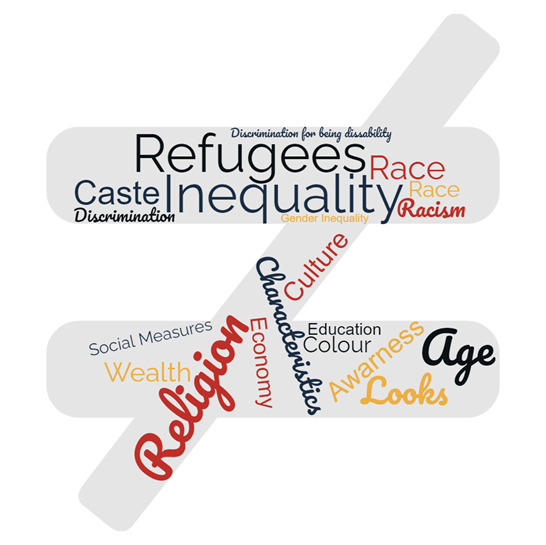
In the first session, we were introduced to the 17 Sustainable Development Goals. We all picked one goal to research, and surprisingly, I wasn’t bored; in fact, I was starting to enjoy it. To begin with, we were told to go around the space and choose an SDG goal. I chose Goal 10: Reduced Inequalities because it felt like a fun topic to explore and to see what people were going through around the world. Next, we had to create a word cloud with, and for that we learnt about this new website which was called wordcloud, which I found really interesting because I was learning something completely new. For me, the website was so cool, as usually when I’m told to make world clouds, it’s always a circle in the center and clouds around it, which is honestly so boring. But on this website, we could fill different elements with words. That was so surprising, and I immediately became excited to do that task, and to think that it was the most boring thing in the world two minutes ago! However, as I progressed with my project, I decided to shift my focus to Goal 2: Zero Hunger, as it aligned better with the idea of my final design. This was mainly because I wasn’t able to come up with strong or clear ideas for Reduced Inequalities, while Zero Hunger was already an option from the beginning and connected much better with the kind of project I wanted to create.
As we moved forward, we started learning the basics of design and sketching. One of the very first tools we used was an isosketch, which helps in creating isometric drawings and visualizing 3D forms more easily by sketching. This made it much simpler to turn ideas into more structured sketches. Isosketch was a very new tool for me, and the first thing I thought after seeing it was, “Why is it neon green and literally a scale shaped differently!” Then we were taught how to use different parts of the tool and how different angles can be created, and how easy it becomes to create 3D shapes, and suddenly that small, weird-looking tool became something that I saw as extremely useful. This place was really making me learn about new things and change my opinions on random things for the better.
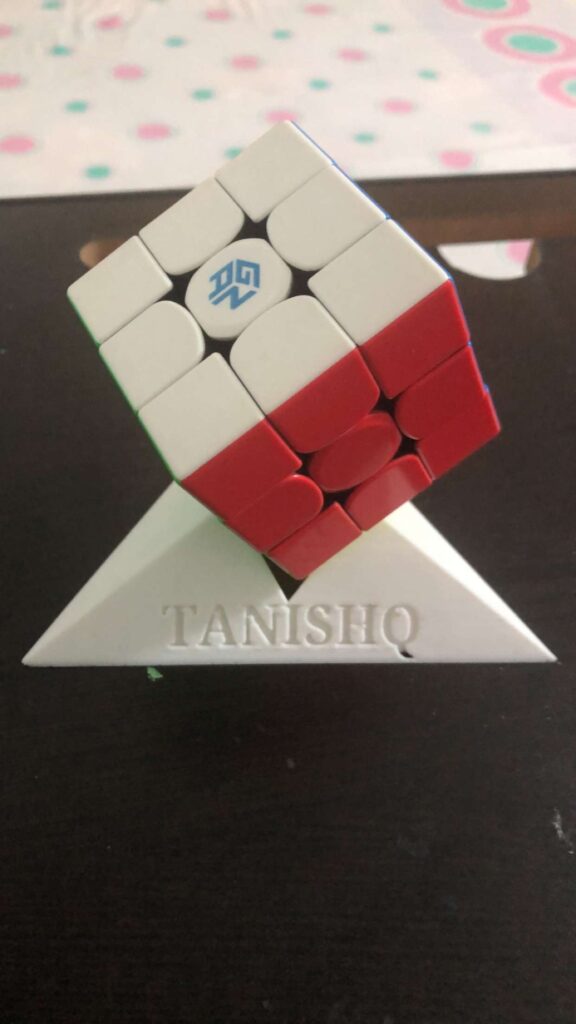
After getting comfortable with sketching and learning to use Isosketch, we were introduced to CAD softwares like Tinkercad. To be honest, I didn’t even know what CAD (Computer Aided Design) stood for or anything about how to create a model, even though I had always wanted to learn it, but never got the chance before that. Learning how to make 3D models made me so happy because I love learning new things. A lot! For me, it was an easy, basic software to learn. But it gave me immense joy to see my designs being printed as 3D models. It also gave me a sense of accomplishment that I could now print 3D models, because rather than just designing it, I was also able to print them. I experimented with different shapes and forms, and even designed a small stand for a 3×3 Rubik’s cube. Obviously, I made a cube stand because I would never stop loving cubes! It was really fun seeing something I always imagined having turned into a proper digital model. We even 3D printed that stand that I still use.
Around the same time, we were also introduced to the concept of biomimicry, which is designing inspired by nature. When I first heard of it, I was very confused about how anyone could take inspiration from nature and create useful things, and I was eager to explore more. One example that stood out to me was owl-inspired noise-cancelling headphones (because how does that even work!). What I found out was that owls have a unique feather structure that allows them to fly silently, and this idea was used to design headphones that reduce noise more effectively. This made me realize the efficiency of the nature around us. Then I immediately started researching more examples that I could use for my project to make it cool. At that point, I was really excited to start working on my idea because it sounded very interesting, and I really wanted to know what my final model was going to look like, and I was also excited to try out new methods that would finally make me learn newer stuff. The main and final project was supposed to be a model of a building using one of the biomimicry examples and a sustainable development goal. I found a lot of examples like Velcro, which was inspired by burrs that stick to surfaces, which I didn’t use as I didn’t really find a good way and a need for something like that in a building; spider silk-inspired materials that are both strong and lightweight, the kingfisher’s beak influencing bullet train design for better efficiency, which I didn’t choose as in my opinion I didn’t think a beak shaped building would be useful, and I had no ideas on how to make something like that. I also found that dragonfly eyes inspired advanced vision systems, fireflies influenced energy-efficient technologies, and trees inspired temperature-regulating buildings. Exploring these examples helped me understand how nature can influence design.
For my main project, though, I decided to design a building inspired by the science behind soap bubbles. Soap bubbles naturally form shapes using the least surface area, and still retain strength. This made them efficient and interesting to work on. Based on this, I thought my project should be something exactly like that, so I designed a dome-shaped structure. The idea behind it was that the shape itself provides strength, so fewer pillars are needed inside, making the space more open and functional. It also reduces the use of materials, which connects back to sustainability. Also, for the other examples I researched, I didn’t really have a clue how I could use that and design a building, so soap bubbles felt like the best choice for my project.
I was excited to see what my final design would look like. But for that, I had to wait till my next class. Stay tuned to find out what I ended up building in the next blog.
